
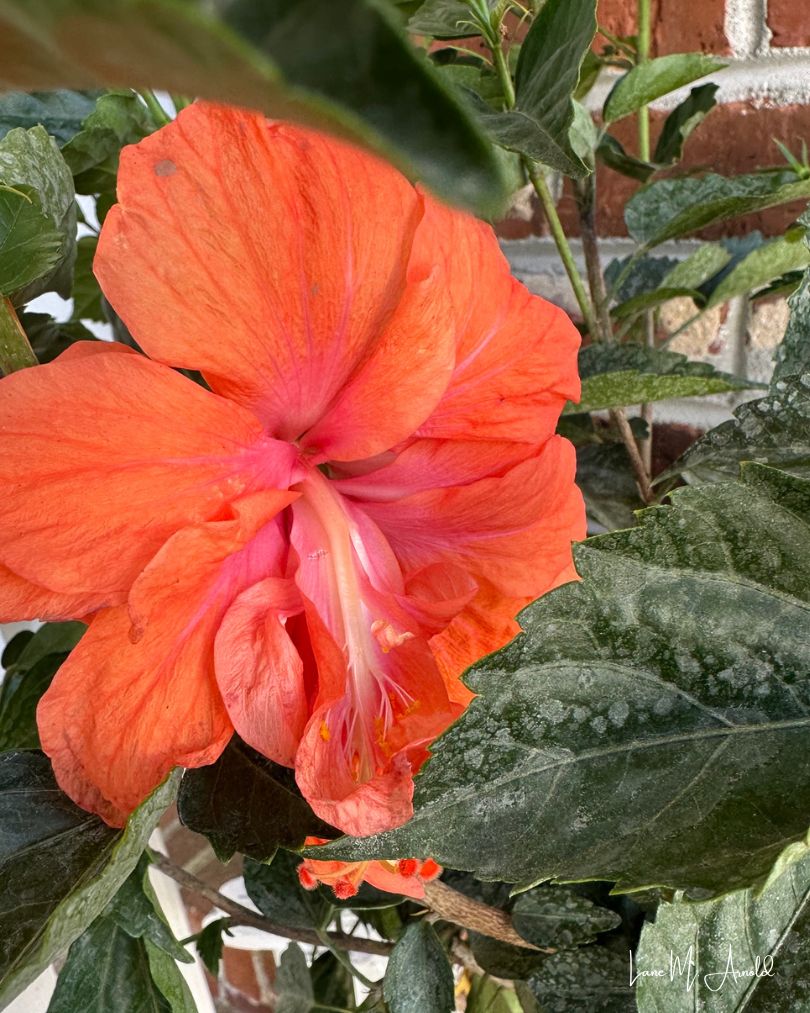
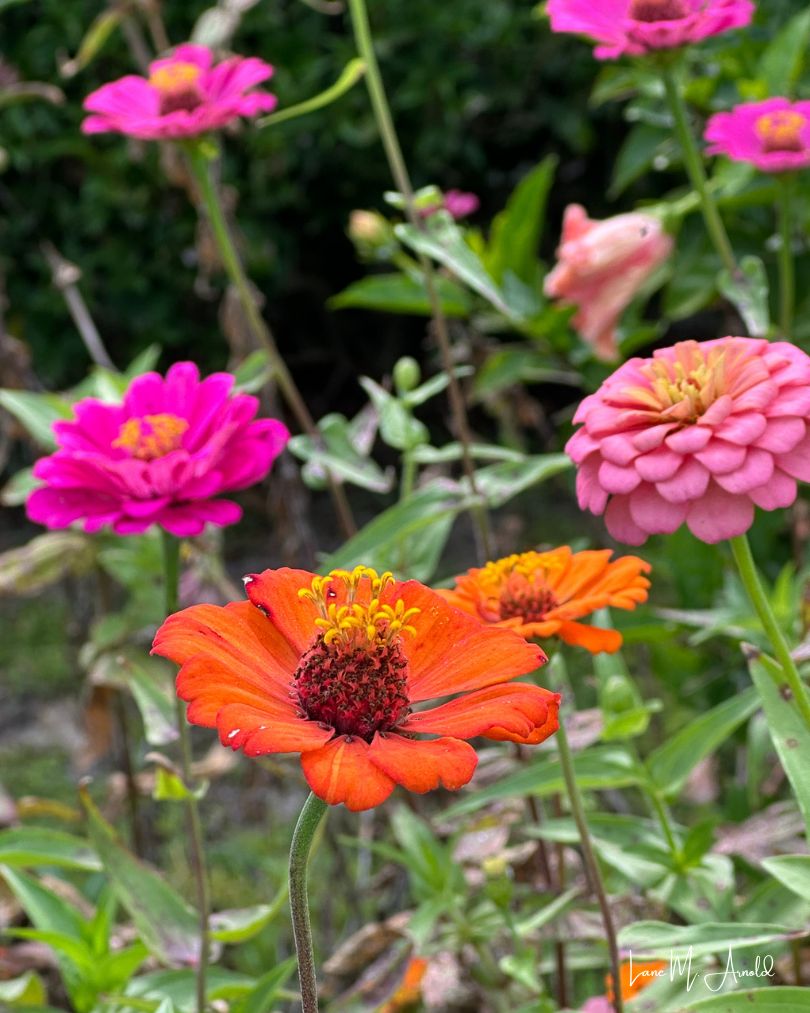
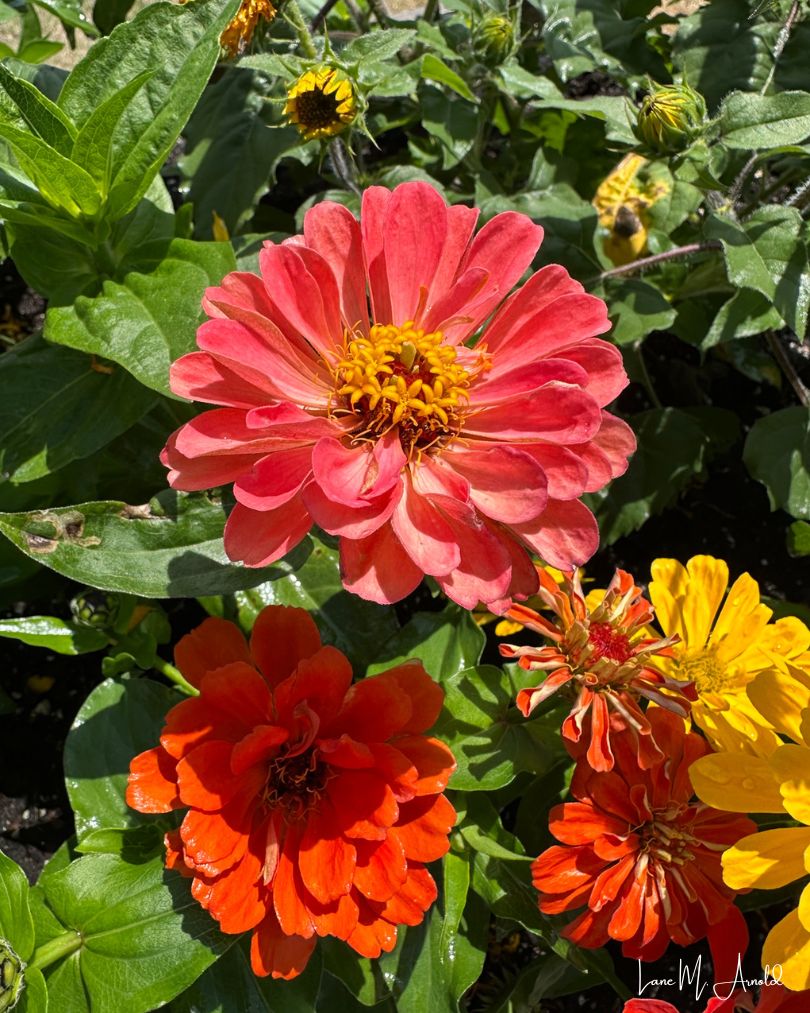
Last summer, I had a plan for a garden and planted five hibiscus trees in our front yard garden spot. Their bright peach blossoms became a vibrant focal point that anchored our garden. Among them, I planted a few edibles, including cherry tomatoes and banana peppers, herbs such as peppermint, rosemary, and thyme, and dazzling zinnias. Bright colors and yummy veggies delighted us from May through mid-autumn.
Then, in December, an unusually deep cold spell came our way, rare for our low-country coastal climate. By the time spring arrived, the sad lack of buds on the hibiscus trees confirmed the worst. Unprecedented cold had zapped the life from our beautiful plants.
Without a firm plan for this year’s garden, I have dilly-dallied until late May before deciding what to do. I liked my hibiscus trees, which anchored the garden’s design. Yet, they didn’t work, so now I need to rethink things.
So often, this same situation plays out as we create. We start with a good idea, and for a while, all goes well. Confident in our why and clear on our what, we rely on foundational outlines to guide our creative endeavors. Off to a good start, we hit detours that halt us. Things slip away. Does that mean the work done so far is wasted? What happens when we begin in one direction only to be waylaid?
Over the past few weeks, I’ve wandered through garden shops, noticing what appeals. I’m flipping through gardening books, and one idea or another catches my eye. Yet ideas from an English country garden or from the Pacific Northwest’s cool-weather gardens don’t translate to our hot, humid locale.
Do I want to stay on the same plan and try hibiscus trees again, taking the risk that the cold snap won’t recur? Shall I invest in a container garden at hip height, changing the yard’s look and feel, and how gardening affects my body? Perhaps I will let the ground go fallow for a season, reinvesting in the garden once autumn arrives. I could simply not make a plan and go with a bit of this and a bit of that, creating a patchwork effect in front of my house. Do I pause? Do I plan? Do I pivot?
When Writers Discover the Original Plan Isn’t Working
As creatives, we often learn to regroup by pivoting. Though we had hoped we were headed toward a robust volume of words, we might have to swivel in a new direction.
One writer wrote half her book as a memoir and the other half as an academic teaching tool. Another writer felt confident she wanted to write narrative nonfiction, yet discovered that her voice and her ideas came through best when she wrote a novel.
Maybe you’ve started down one path, only to realize it wasn’t the vehicle you wanted for the ideas you longed to share. Have you ever felt like your memoir’s structure needed a breath of fresh air to keep it from becoming lifeless? Was your narrative nonfiction’s academic tone so dry that you could almost see the leaves on the branch of words shrivel? Have you tried to create a novel with nuance and depth, only to find it now reads like a sappy, disjointed tale?
When you are at the edge of deserting your work-in-progress or are tempted to give up the world of writing altogether, what helps when you are faced with thoughts about what to do next?
Each form shapes the underlying story differently, and perhaps that is what is missing in the work you are creating today.
Exploring the Different Shapes a Story Can Take
Let’s start by exploring how memoir, nonfiction, and novel structure can all work well with a story you want to tell.
Memoir, grounded in the author’s lived experience, adopts the first-person perspective. As its writer, you tell your truth from your perspective, interpreting events as you remember them. When writing this type of book, you share what the experience meant to you and offer your inner transformation as the story’s arc. In a memoir, vulnerability stands at the center stage. Corrie Ten Boom’s The Hiding Place and C.S. Lewis’ Surprised by Joy take you along on a soul journey. The reader will be close enough to smell the stench or touch the flower’s petals, as if they have actually been to that spot in the memoir. Your reader will experience your moments and feel as if they are a companion, because the structure is intimate and relational.
Narrative nonfiction takes the same true story and blends it with storytelling techniques. It may also include research and interviews with others. It can be written in first person, like a memoir, or in third person, offering multiple perspectives. Here, you share not only what happened, but also why it matters in history or culture. In narrative nonfiction, context and facts play a large role. Not only will the reader smell the roses, but they will also see how they belong within the culture. Your reader will find meaning in the story that happened to you, as well as how it fits in the wider world.
Novels allow creativity. You can invent themes drawn from real events for dramatic effect. Rather than literal accuracy, you might compress or expand a timeline and may create characters that are composites of several people. In novels, imagination and drama walk hand in hand, and the theme may show up subtly, rather than in as obvious ways as they would in memoir or narrative nonfiction. Emotional connections will occur as the tale unfolds.
Choosing the Reader Experience You Want to Create
There is no single right or wrong structure to use for your core material. The question is which form works best for what you want to convey. Narrative nonfiction may work best if you want to offer insights, theology, or teachings. If you want to let people walk in your shoes and feel your inner transformation, a memoir may be the best way. If you want to add more symbolism and invent characters or scenes, try writing a novel.
Each structure holds a different emphasis and offers a different reading experience. The structure changes the perceived distance between the story and the reader.
Consider what your goal is for your reader. Are you aiming to educate them? Let them experience what you did? Let them be immersed in the theme without catching every moment? The form you chose creates a different atmosphere on the page.
Do you want the reader to feel what you felt, as if they have companionship in the journey? Consider a memoir.
Do you want your story to be part of a broader Christian and cultural conversation for your reader? Consider narrative nonfiction.
If you want your reader to step into truth from within their imagination, the artistic form of a novel would be lovely.
Like Gardening, Writing Requires Vision and Experimentation
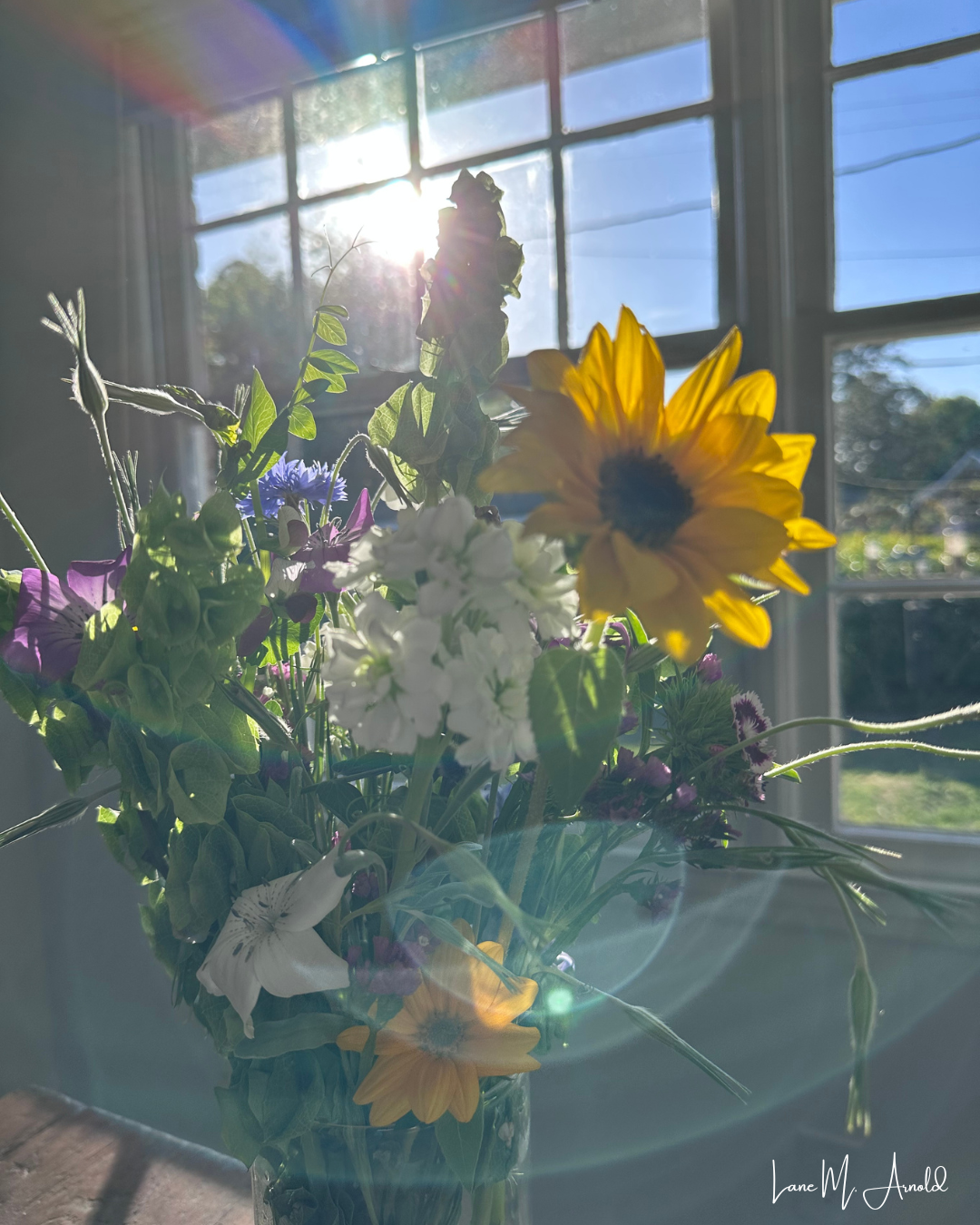
As I consider what kind of garden to plant this summer, I’m pondering what I want to offer and what I want others to experience as they visit.
Though I like the look of knot gardens and Parterres and find reflection pools appealing, I’m more likely to create the feel of a cottage garden rather than a formal, symmetrical garden like the one at the Palace of Versailles.
Minimalist gardens, full of calm, soothe my soul, yet I like the feistiness of colors and action for my front yard.
One day, I may move to elevated raised beds full of edibles, giving me more control over how much I have to bend and kneel. Herb gardens create beauty and flavor in the yard and the kitchen, yet this year, I want some flowers as well as herbs.
I could choose from a garden centered around roses, bamboo, rocks, cacti, shade-loving plants, or butterflies, but I’m certain those won’t be the structure I choose.
What might happen if you experiment by imagining and then try out those possibilities? If you are wondering whether to create a memoir, narrative nonfiction, or a novel, you could craft a scene or two, maybe even a chapter or two, to see what your story might look and feel like in that format.
Whether we are creating a good book or a good garden, it all requires decisions, offers wonder, and brings joy to the creator and as the one who partakes. Here’s to the adventure ahead.
As you consider your structure, I am eager to hear which choice you’ll make. Will you create a memoir, a narrative nonfiction, or a novel? If you’d like help working through some of these questions, let’s connect. I’d welcome the chance to help you create a plan for your creative endeavor.
