
Picture an electrical pole leaning precariously, with high-voltage lines still attached but all those vital wires dangling down a bit too close to the earth. Imagine a neighborhood dependent on that pole to stay steady, for its posture helps provide vital electricity to homes. Such was the scene last autumn when a strong storm blew through our area, topping off tops of trees, upending electrical poles, and pushing others slightly askew. That unnatural angle triggered the imagination, wondering when or if the crack of wood breaking or sparks buzzing might occur.
Thankfully, the pole didn’t topple. Our electric power remained on, and that adrenaline spike that tightened my stomach settled down. Yet, the pole still required assistance. The neighbors in the brick houses bordering the pole, one of them just a house over from ours, stayed alert until the massive white electric trucks showed up. To address the issue, workers set up a buddy pole, a temporary secondary pole, until a permanent replacement pole could be installed. Then they left. And we waited. And waited. And waited.
Turn the clock forward ten months from when the original pole slanted, past the cool crispness of autumn, the brisk whistle of winter, and the soft warming sassiness of spring. In the thick, humid sizzle of summer, a bright blue utility notice appeared on doorknobs and alerted us to upcoming major maintenance. Finally. Hurray!
Wait. What? I couldn’t believe what I was reading. No power from 9 AM until 4 PM on a stifling summer Wednesday in the middle of July??? The neighborhood took advantage of having the customer service number provided by the notification tag and inundated the electric company. Why now, in the middle of the heat, and why not back when the weather was more tolerable for a no-electricity day? Yet, even as people complained, a collective sigh of relief showed up as well. We had been holding our breath, unsure of what might happen with that leaning pole, and now, finally, help was coming.
The Planning Behind the Scenes
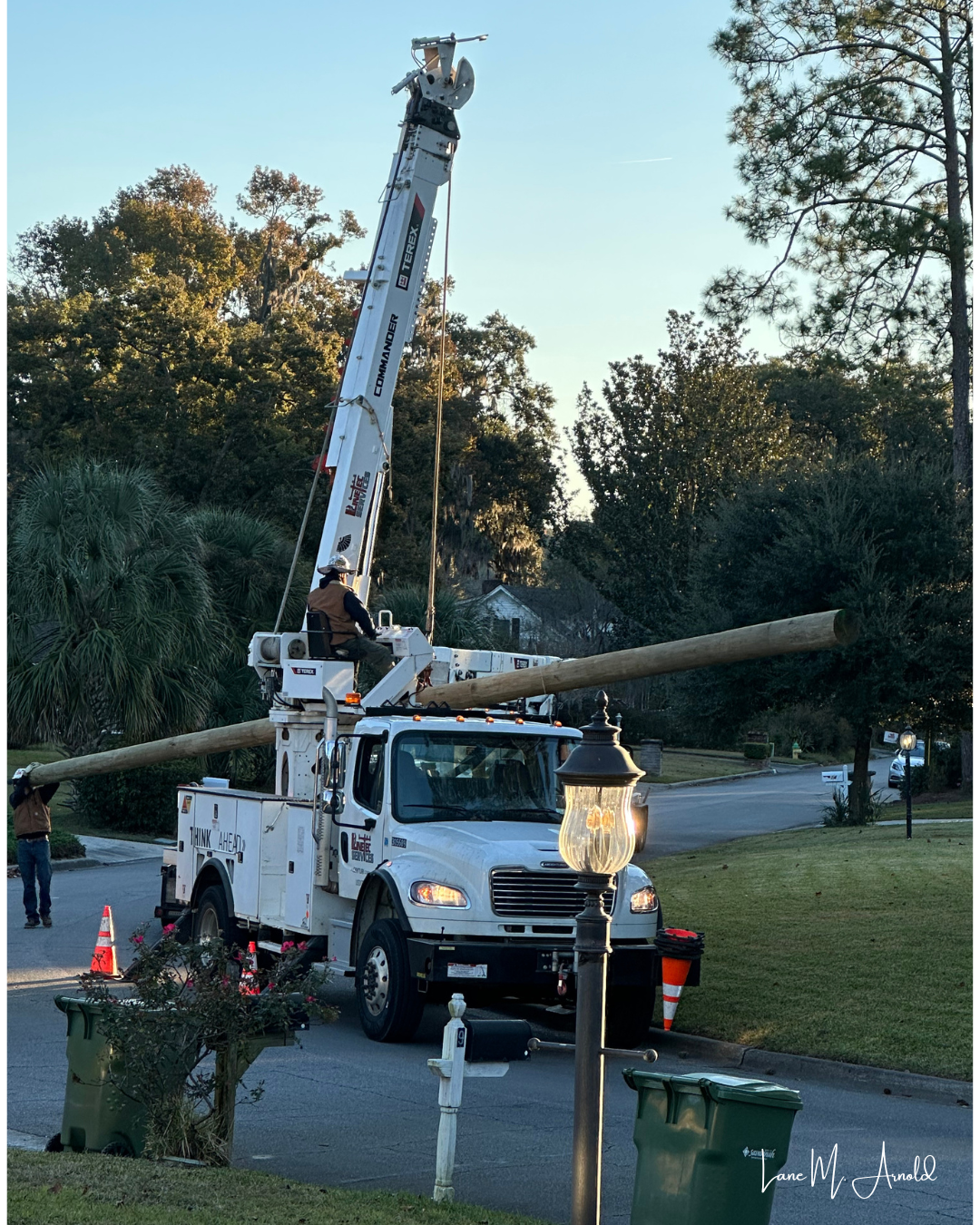
We learned that what the utility workers intended to perform required extensive planning on their end, facets we surely weren’t privy to as customers. There was nothing haphazard about this project.
Before the heavy-duty electric company trucks arrived with the actual replacement pole, crews appeared a few days at a time, over a few weeks’ time, to survey the site. They marked underground gas lines. Then they measured the leaning pole for the accurate size required for the replacement pole, considered where to position trucks, looked at traffic control impact, lined up necessary personnel, and then ordered necessary equipment for the job ahead of them. By the time the big workday arrived, amid a heat wave dripping sweat down our necks, their protocol of discernment and planning set out a logical path. They hoped for an ease of replacement that would benefit both the workers facing soaring heat and the customers facing no power.
As a book coach who watched trucks come and go for weeks and weeks, I saw parallels. Similarities exist between writers who create a plan for their imagined manuscript and the way the utility company planned for the replacement pole day. Both held complexities. As we all know, complex projects can crash without adequate forethought. By starting with an assessment to make certain of a firm foundation, a good plan is lined up to go forward. There is hope to prevent future problems down the road.

What a Utility Crew can Teach Writers about Discernment
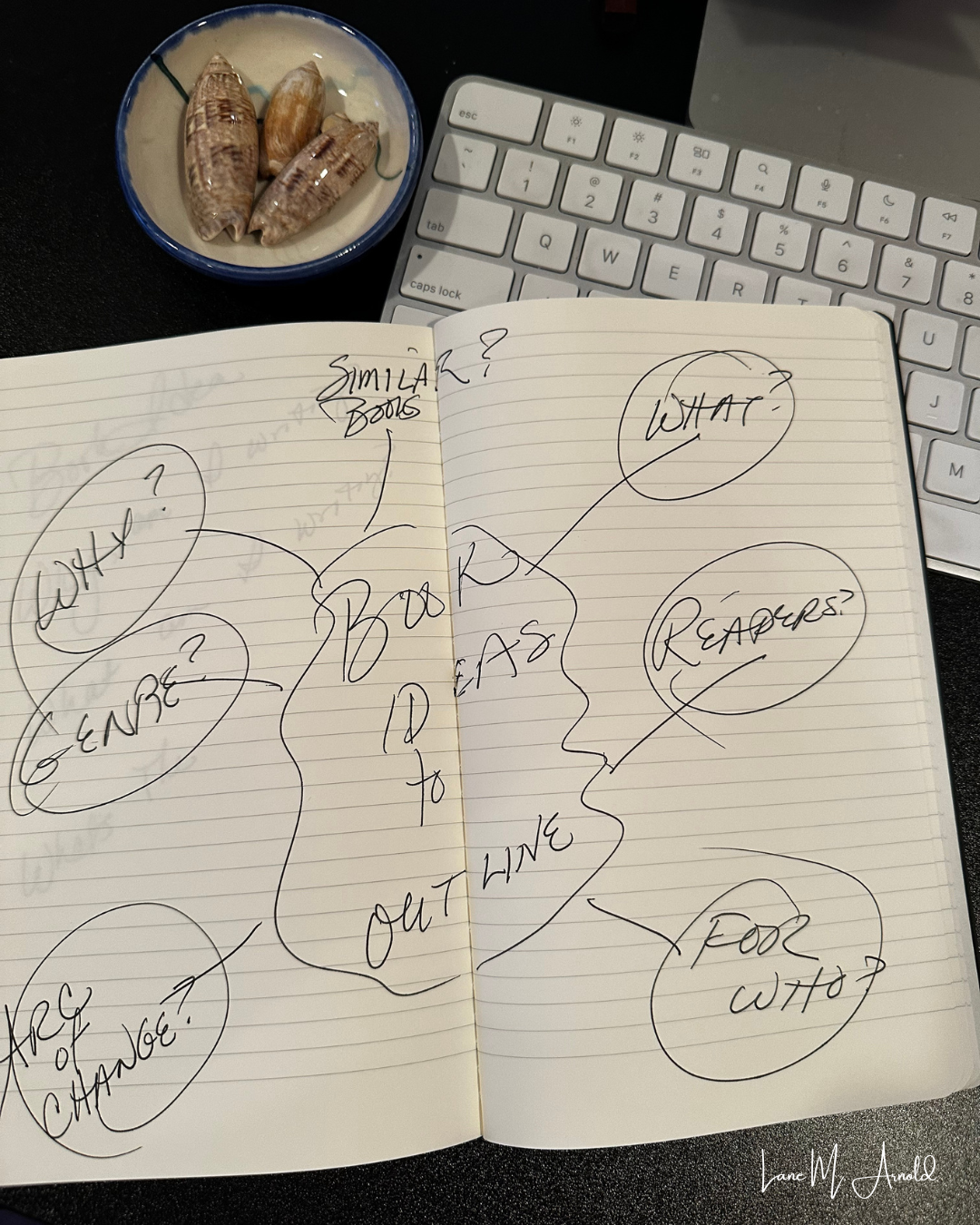
While the utility crew assesses a situation and decides what is necessary, a writer gauges initial ideas and stays curious about strengths and weaknesses. In my work as a book coach, I’ve been trained to use Jennie Nash’s Blueprint for a Book, and permitted Author Accelerator to hold up this framework. Such assessment and groundwork builds a sturdy foundation for what’s to come.
Workers need to ensure that the flow of energy happens by wisely lining up and spacing wires, providing adequate lengths of wires and necessary tension to keep the lines in place. The electric company must consider constraints at the site: fences, trees, and existing buildings. How will they finagle their trucks into backyards to approach the pole that resides between parallel rows of homes that back up to one another? How many workers are needed? What equipment is required? How will it all be positioned in the space of one homeowner’s backyard? By preplanning, the utility crew hoped to avoid disasters and delays (hitting a gas line, preventing fires, code adherence, traffic snarls), much like a writer hopes to sidestep structural flaws when writing a book.
Using a series of questions to help with discernment of design means the scope of the project, whether nonfiction, fiction, or a novel, involves time. Writers need time to notice and catch potential problems like plot holes and pacing before they ever begin writing their novel. Such wise use of time creates consistency as well. Preplanning a book doesn’t curtail creativity; instead, it curtails fatigue and overwhelm, offering step-by-step guidance and wisdom for the imagined manuscript endlessly stirring in the head and heart of a writer. By doing foundational work up front, upstream, so to speak, more energy is available to craft prose downstream.
The Best Laid Plans and the Surprises that Follow
Now, this doesn’t mean that there are no surprises.
When the utility crew began the well-planned, lengthy replacement process, the workers still encountered difficulties and were tasked with figuring out last-minute workarounds. Though they had predicted seven sweltering hours with no power, it ran closer to a scorching ten hours. With our neighborhood being an older one, the crew discovered a flaw in their expectations. In reality, rather than an easy reset to automatically restore the electricity, the workers ended up having to manually reset the electricity for each house involved, running their time estimate still higher than expected on a red-hot July day.
However, without any planning, as is necessary in an emergency pole replacement when a menacing hurricane comes our way, the power may need to be cut for even longer.
Just last week, a severe thunderstorm popped up. As it lit up the sky, a bolt of lightning hit a nearby transformer. Lines dropped to the ground and caused quite a kerfuffle.
Thirteen long, hot hours later, after a blistering night without power, it was finally restored. We all celebrated the wonder of air-conditioning wafting through the ducts even as we tossed all perishable food out of our warm refrigerators.
Thinking back to the planned maintenance pole replacement, one thing we all appreciated was how utility workers roamed the streets during the installation day, sharing information. They kept us updated about progress and kept us aware of problems encountered, so we didn’t feel confused and were offered hope even in a frustrating situation.
Utility Workers mimic a Book Coach’s Role
We encourage when the good and easy happens, and we stay present when the hard comes along the way. When a writer sketches a skeleton of their manuscript, book coaches work alongside, offering a listening ear, a professional perspective, and both emotional and creative support.
With a book coach alongside, writers don’t face confusion or roadblocks alone. They gain a companion who cheers, acts as a sounding board, and provides deep questions. They help you explore your discernment and design, so your blueprint carries the heft needed to create a robust manuscript.
So often the work of the writer is as much in mindset work as it is in the craft of words on the page, sometimes even more so. A book coach helps you confront confusion about what’s got you rattled, when you find your shoulders knotted and your breath shallow. Not only can a book coach help you set realistic deadlines, but they also provide accountability when procrastination pops up as your daily whack-a-mole.
This afternoon, another storm rumbles overhead, and a few blobs of wind could spin up into hurricanes as they drift across the Atlantic. I hope we don’t experience a loss of electricity again, as we have when previous storms were unwelcome visitors. However, I do know, like, and trust the electricity company. Their crews will work relentlessly to restore power. I also know planned maintenance goes smoother and faster than unplanned emergencies. Whether you are amid a calm day of imagining your future book or storm-side as you work on a book idea, consider letting a book coach work with you to discern and design your book’s possibilities.
What book is bubbling up within you, ready to be launched into the world? Perhaps you are stuck in the beginning, stuck in the middle, stuck in doubt or overwhelm? You wish the peace and joy would show up occasionally in the writing process, because you didn’t know that writing a book would require so much of you, that it would be such hard work.
What would it be like for you to move from ideas that slant awkwardly, like our neighborhood’s utility pole, to having a buddy pole and a utility crew come alongside – not just for a temporary fix, but for the whole process as you steady your ideas into reality with discernment in designing your book?

Along with being a book coach, I’ve also participated in Jennie Nash’s Summer Blueprint Challenge. I focused on a book I am imagining, one on soul care for caregivers. The book I want to write and the one you want to create both have audiences eager to read what is ready to be written. Just as I’ve been challenged by pre-planning my future book by working through the book and the blueprint process with a book coach, I hope you too will move one step closer to handing your book to eager readers.
If planning your book is something you’d love to explore deeper, let’s connect. I’d welcome the opportunity for a free discovery call. Come discuss your hopes, and let’s see if my book coaching and editing skills, which I’m passionate about, are something that would benefit your next book.
