
Clear Space, Set SMARTer Goals, Hone Your Craft
If you’ve ever stood at the edge of the ocean, watching the waves roll in and slide back out, you already know something about the creative life. It has a rhythm all its own. In some seasons, innovative ideas pour in faster than you can catch them. In others, the water slips far out, leaving you staring at bare sand, wondering if anything will ever wash up again. Both are part of the creative journey.
Don’t we all long to capture our creative thoughts before they slip back out to sea? How can we stay attuned to what intrigues us and carry it through to fruition? What would happen if we cleared space, set goals that can breathe, listened to inner movements, tuned up our skills, and remembered to celebrate?

Clear the Clutter, Inside and Out
Think about the last time you stepped onto a forest trail. The air smelled of cedar and wet leaves, sunlight filtered through the evergreen branches in soft patches, and somewhere along the way, your shoulders loosened. There was room to breathe. Now look at where you write.
When I’m scurrying about, my space quickly fills with bills, overdue library books, and a few projects I started with high hopes. Clutter’s voice may be quiet, yet it never stops demanding my attention. The same goes for the clutter in our heads: the running to-do list, worries overflowing about someone we love, and the questions that keep us awake at night.
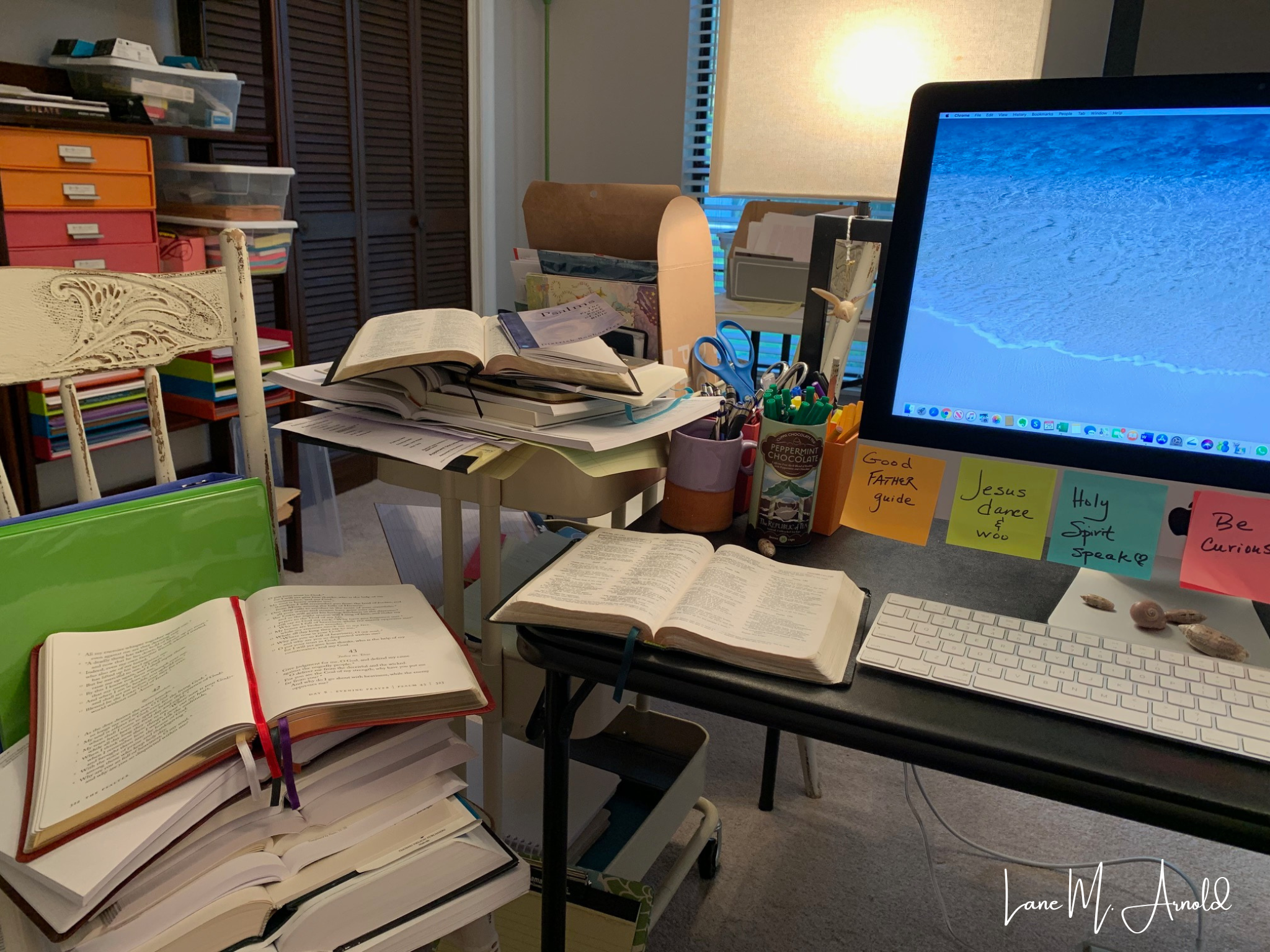
Clearing even a small space can change everything. Give this a try. Wipe down every surface of your desk. Put away what you aren’t using. Set out your favorite candle. Bring in the mug that feels just right in your hands. Find a place for the smooth stone you picked up on yesterday’s walk. You’re telling yourself that this writing matters, that beauty enhances your choice to sit and write, and that you want to show up for it.
Then tend to your inner space, too. Take a slow walk. Listen to the wind moving through the oak trees as they shed their leaves in autumn. Then come inside and spend ten minutes listing everything swirling in your mind, just to get it out on the page. Sit quietly with God and ask Him to remind you of the gifts He’s placed in your hands for this creative way of life. Take a few deep breaths before opening your current document. Notice how it feels when you make room around and within you. Where do fresh ideas appear now that they have room to settle?
Set SMARTer Goals
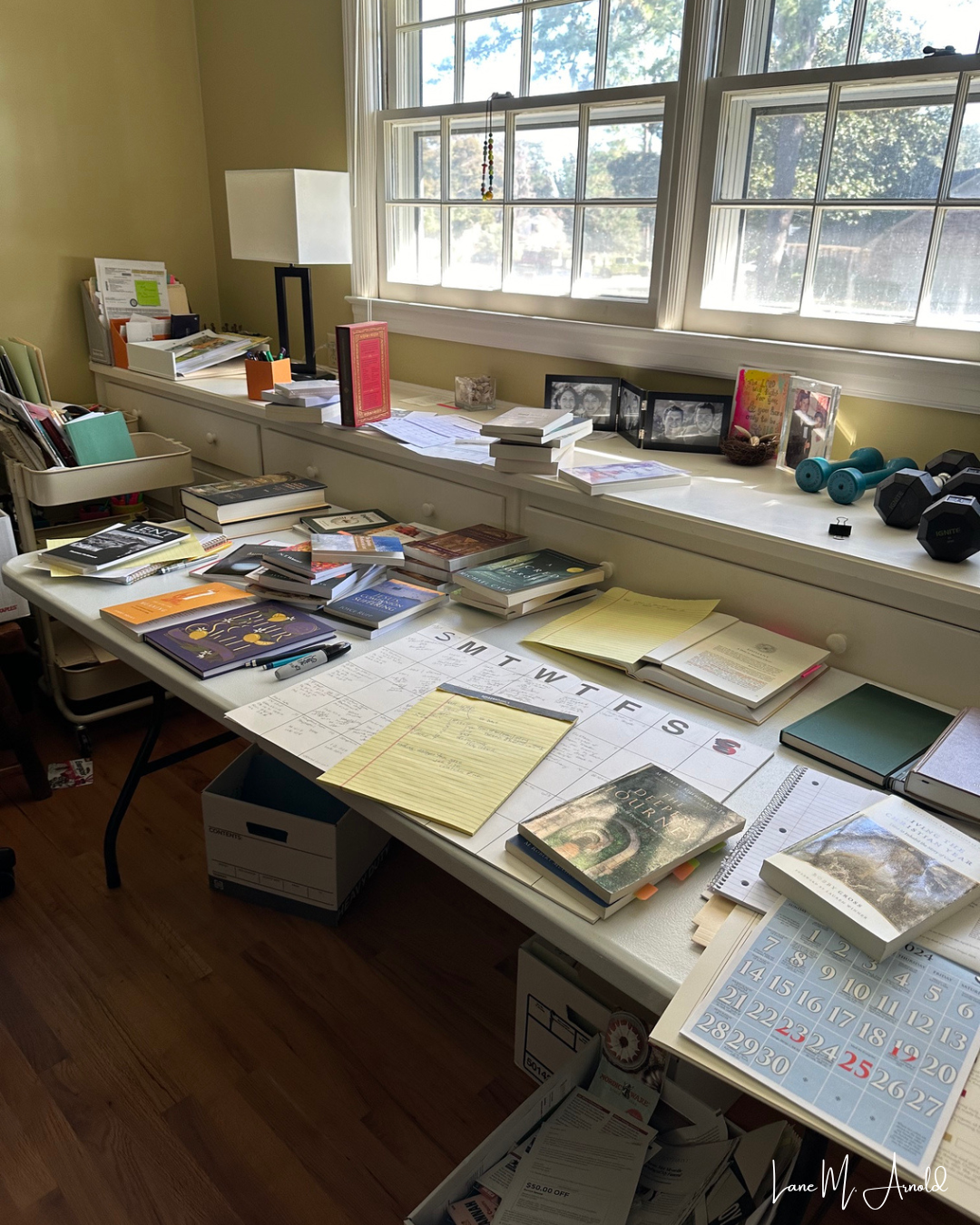
Creating spaciousness readies the atmosphere. Goals do too, keeping us on track. Most of us have encountered SMART goals somewhere along the way: Specific, Measurable, Achievable, Relevant, and Time-bound. I appreciate them because they can be genuinely helpful.
However, my creative work rarely follows a straight path. It moves more like the tide. A goal such as “write 250 words a day for the next week” looks tidy on a planner page, yet it leaves no room for the days when the tide goes out. So I make my goals SMARTer by adding two more letters: E for Evaluate and R for Readjust.
Evaluating is like walking the shoreline every so often to see what the tide has left behind. Once a week, pause. Take an honest, kind look. What happens when you’ve hit your daily word count but feel far from the heart of your story? What’s going on in this season of life that may affect the depth and pace of your writing?
As you consider your current landscape, consider how to readjust. Shift based on what you notice. Changing course isn’t quitting. It’s paying attention. Your creative work is a living thing. Let your goals grow and bend right along with it. When they do, they stop feeling like an overbearing yardstick held up to your efforts and start feeling like a friend walking the beach beside you.
Listen In
Those two extra letters, E and R, for Evaluate and Readjust, invite discernment.
Try this. Look back over the past few weeks of your artistic playfulness and ask yourself when you felt most alive, most in tune with God, and most at peace with your writing. Perhaps dialogue came easily, or the perfect image arrived for the last line of a poem, or a reader told you your words encouraged them through a hard week. These moments often point directly to your being in alignment with God. You find you are stepping fully into your writing with your whole self. You know your strengths, the writing gifts that are uniquely yours. You lean into them and give them more time and room to grow.
Then turn and look honestly at the moments of utter frustration. Perhaps you dread writing setting and description, your plots bog down in the middle, or you put off revision like you’d put off wading into icy-cold ocean water in midwinter. These moments show where we need to adjust. What’s underneath your dissatisfaction? Is the mindset, the topic, your craft skill set, or the method you are using something to reexamine?
Along with inner discernment about your heart and soul as a writer, consider what might be wise to do about the weaknesses and roadblocks you are encountering. Weakness in our creative life isn’t a final verdict on our work or worth. It’s a summons to grow, whether through classwork, reading inspiring authors, or small practice sessions where nothing is at stake.
When you sit down to evaluate your SMARTer goals, bring these questions:
- Where did I find joy in my creative work this month?
- Where did I feel frustration or disappointment?
- What are my writing strengths and weaknesses, and how am I tending to them?
Then readjust. Build on what hones the gift you’ve been given as a writer. Choose one small, specific goal to strengthen an area that feels challenging. Over time, our goals become less about striving and pushing and more about listening to God, knowing ourselves, and seeing where our creative life is leading us.
Develop Your Craft
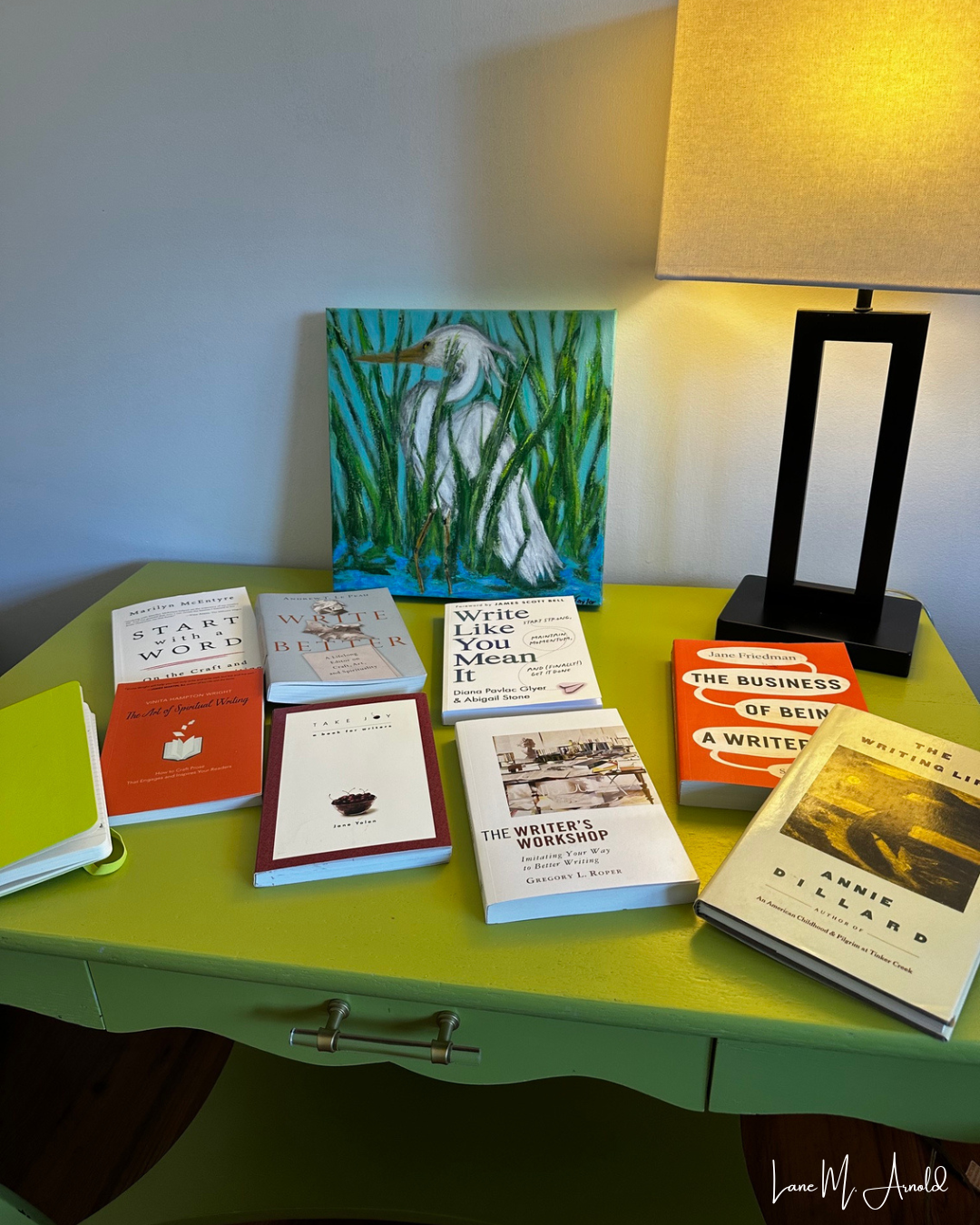
Writing is a skill we learn by practicing, much like a surfer who paddles out, wipes out, and climbs back on the board again and again. Good writing books make wonderful companions for developing your craft. Let’s look at what several writing books can offer to sharpen your writing, both its strengths and weaknesses.
Marilyn McEntyre, Start with a Word: On the Craft and Adventure of Writing
- Marilyn McEntyre invites you to slow down and ponder how words matter, kindling reflection in the writing life. She has spent a lifetime thinking about how words carry meaning. If you’ve ever been lucky enough to sit in on one of her classes, this book reads like her teaching. It’s a marvelous gathering of her wisdom in short, practical chapters. She explores how to open and close a piece, choose the exact word instead of the almost-right one, decide who tells the story, and determine which facts belong and which can go. Each chapter includes multiple “Try this” exercises, so keep your notebook close by. Her examples stretch from the Apostle Paul and Dante to contemporary writers, and her advice works for nonfiction, fiction, memoir, and poetry alike. For your strengths: if you already love language, this book will help you sharpen that love into precision. For your weaknesses: if your drafts tend to feel vague or wordy, or you struggle with how to begin and end, explore her exercises, which will give you small, concrete ways to practice until it feels natural.
Andy Le Peau, Write Better: A Lifelong Editor on Craft, Art, and Spirituality
- Andy Le Peau’s book offers a seasoned editor’s insight into craft, art, and the spiritual side of writing. Reading it, I feel as if a wise friend is sitting across the table with my manuscript in hand. The book moves through three areas: the nuts and bolts of craft, the more mysterious art of creativity, and the spiritual life of the writer. He talks honestly about revision, getting stuck, failure, and the humility it takes to let others help make our work better. For your strengths: his chapters on creativity can help you recognize what comes naturally to you and give it room to flourish. For your weaknesses: if you resist revision or feel defensive about feedback, his editor’s perspective can help you see editing as a gift rather than a judgment.
Vinita Hampton Wright, The Art of Spiritual Writing
- Vinita Hampton Wright offers a valuable resource for anyone who writes about faith and the inner life. This book is for anyone who wants to write in a way that invites readers in rather than preaching at them. She addresses common pitfalls, including religious jargon, tidy endings that ring false, and abstract language that keeps readers at a distance. She encourages honesty, vulnerability, and concrete, sensory detail. For your strengths: if you have a deep and authentic spiritual life, she will help you translate it onto the page so others can enter it with you. For your weaknesses: if your spiritual writing sometimes slips into lecturing, clichés, or easy answers, her guidance will help you write with more freshness and integrity.
Diana Pavlac Glyer and Abigail Stone, Write Like You Mean It: Start Strong, Maintain Momentum, and (Finally!) Get It Done
- Diana Pavlac Glyer and Abigail Stone encourage you to take your writing seriously and to find a path to complete what you begin. They offer a map through the entire writing process, from the first spark of an idea to clear, finished prose that reaches readers. Their premise is reassuring: most projects stall not because the writer lacks talent, but because the writer can’t see the next step. For your strengths: if you’re full of ideas and enthusiasm, the book will help you channel that energy into steady progress. For your weaknesses: if you start projects but rarely finish, lose momentum in the middle, or simply feel lost, it offers practical, encouraging guidance for getting unstuck and crossing the finish line.
Jane Yolen, Take Joy: A Writer’s Guide to Loving the Craft
- Jane Yolen offers a warm reminder that delight belongs at the center of the work. Yolen wrote hundreds of books for children and adults. Her decades of experience and generous spirit shine through in this collection of reflections and advice. Her book covers practical matters such as character, plot, voice, and revision, along with the realities of rejection and the life of a working writer. Underneath it all runs her central message: writing should bring you joy, and that joy is what sustains you through the challenging parts. For your strengths: she helps you remember why you started writing in the first place and how to protect that delight. For your weaknesses: if writing has started to feel like a grim chore, or if perfectionism and fear of rejection keep you frozen, her warmth and humor can loosen your grip and help you play again.
Gregory L. Roper, The Writer’s Workshop: Imitating Your Way to Better Writing
- Gregory L. Roper draws on a time-tested teaching method: learning to write by imitating great writers. Much as artists once learned by copying the great masters, he invites you to study fine sentences and passages closely, then write your own versions that follow their patterns. Along the way, you learn how variety, rhythm, and structure work from the inside out. For your strengths: imitation can expand your existing style, adding new tools to your toolbox. For your weaknesses: if your sentences feel flat, repetitive, or all the same length, these exercises are among the most effective ways to build fluency and flexibility at the sentence level.
Jane Friedman, The Business of Being a Writer
- Jane Friedman is one of the most trusted voices on how the publishing industry actually works. This book walks you through the practical side of a writing life: the differences between traditional and independent publishing, how agents and editors make decisions, how to build an author platform, how to reach readers, and how writers earn income. She is clear-eyed and honest, without hype. For your strengths: if you’re already good at connecting with people or organizing projects, she’ll show you how to put those skills to work for your writing career. For your weaknesses: if the business side feels confusing or overwhelming, or if you’d rather not think about marketing at all, she breaks it down into understandable steps so you can make informed decisions.
Annie Dillard, The Writing Life
- Annie Dillard wrote a slim, luminous meditation on the daily, humbling labor of putting words on the page. Her book reflects on solitude, long hours, the difficulty of revision, and the willingness to cut even beloved passages for the good of the whole. Her prose is vivid and full of striking images. Reading it feels like sitting with a fellow traveler who knows exactly how hard and how holy this work can be. For your strengths: if you have a gift for imagery and close observation, Dillard will inspire you to go deeper. For your weaknesses: if you struggle with discipline or find it hard to let go of material that isn’t serving the work, she offers both challenge and companionship for the daily commitment writing demands of us.
Celebrate the Journey
So, here’s my invitation to you. Treat your creative life like a beautiful day at the beach. Clear out the clutter to create fresh, open space, just as the tide smooths the sand each morning. Set SMARTer goals. Listen to what your writing life needs. Build on your strengths and grow wiser as you develop new skills to address your weaknesses.
Please remember to play! Build a sandcastle of a story just for fun, knowing the tide may carry it away. Chase a wild idea like a child chasing the edge of a wave. Gather small moments like seashells in your pocket. Celebrate every win, no matter how small, with an ice cream cone, a sunset walk, or cheers with friends. The writing life follows a long, winding shoreline. Take time to enjoy every step along the way.
If play is an area you find hard to embrace, here are a couple of resources you may enjoy:
- Go Play in the Shallow End blog
- Behold Playfulness: Find Joy in Your Creative Writer’s Heart
- Play: Reclaiming Childlike Joy with God
- Play as a Spiritual Discipline – A practical guide teaching you how play as a spiritual discipline prepares you for the delight you will find in heaven and draws you closer to God.
